
ROS Development | Comprehensive support from design and implementation to HILS-based real-world testing and operation.
Comprehensive support from design and implementation using ROS to actual device verification using HILS and operation.
SANEI HYTECHS supports robot and system development using ROS 2. In addition to design and implementation using ROS 2, our company supports our customers' robot development by utilizing HILS (Hardware-in-the-Loop Simulation) for real-time simulations with near-actual accuracy. We also support software management using SBOM (Software Bill of Materials) and the development of operational systems combining AWS, Kubernetes, Zenoh, and other technologies. ROS 2 is also being used in the development of Physical AI, which has been attracting attention in recent years. With our technical expertise developed through comprehensive support from design and implementation to verification and operational system development, we also support Physical AI development.
INDEX
- Design and implementation capabilities using ROS 2 and real-world verification capabilities in the age of physical AI.
- Design and implementation of a ROS 2 system tailored to your requirements.
- Verification in an environment close to the actual device using 3DCG and HILS
- Development of Operational Systems
- Robot Development Combining Pedestrian Flow Data
- From Design and Implementation Using ROS 2 to Verification Using HILS and Operational System Development
Design and implementation capabilities using ROS 2 and real-world verification capabilities in the age of physical AI.
Physical AI refers to AI that targets physical robots and systems that operate in the real world.
Its distinguishing feature is that it recognizes the situation using sensors such as cameras, and makes decisions and acts autonomously. It is expected to be utilized across various fields such as manufacturing, logistics, and agriculture. On the other hand, developing Physical AI requires significant time and cost for verification in real-world environments. Furthermore, testing with actual equipment poses risks of damaging the robot or surrounding facilities during operation.
This is where Sim-to-Real comes into play, transferring verification results from simulations into actual operations on real hardware. Simulations allow for repeated testing without using actual hardware. On the other hand, discrepancies in operation can occur between simulation and actual hardware due to differences in conditions such as sensors, control equipment, and the surrounding environment.
Our company supports design and implementation using ROS 2, as well as verification in environments close to actual hardware utilizing HILS. By verifying robot control software while checking discrepancies between simulation and actual hardware, we help advance your Physical AI development.
ROS 2 Development and Verification Track Record
Our company has a proven track record in software development using ROS, including the development of ROS software for motor control microcontrollers for industrial robot manufacturers. Furthermore, we research and develop autonomous mobile robots and mandarin orange harvesting robots in-house, conducting operational testing and driving demonstrations with actual hardware.
Our strength lies in providing comprehensive support, from design and implementation using ROS 2 to verification using actual hardware.
Our strength lies in providing comprehensive support, from design and implementation using ROS 2 to verification using actual hardware.
ROS Software Development for Motor Control Microcontrollers
For Industrial Robot Manufacturers
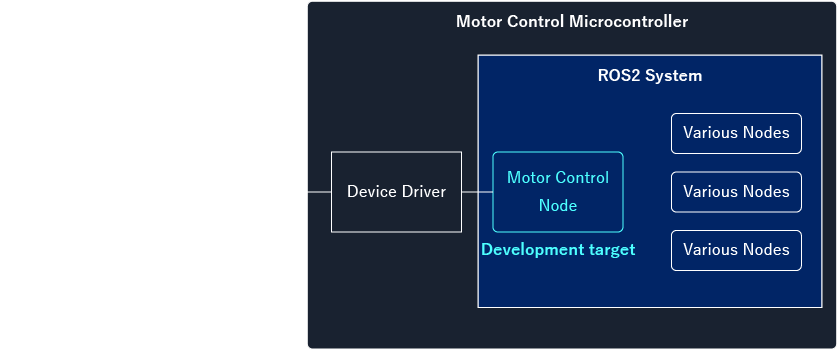
ROS software development for motor control microcontrollers
In-House Track Record: Development of Mandarin Orange Harvesting Robot
Developing a mandarin orange harvesting robot as part of a smart agriculture project
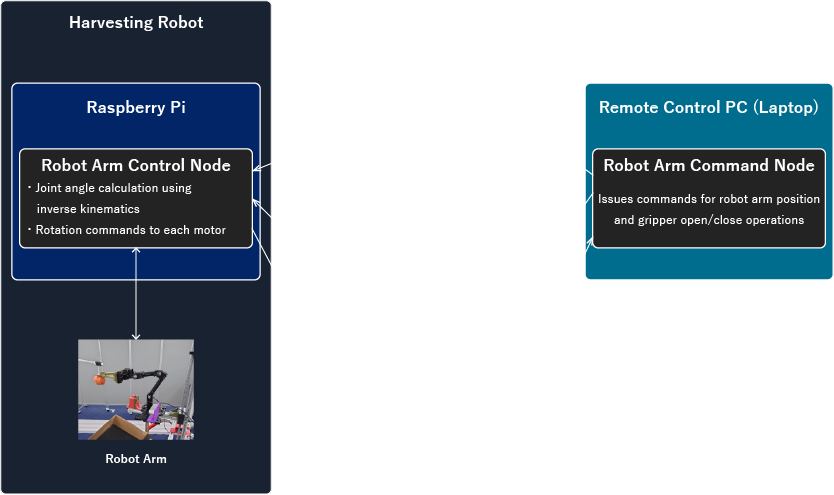
Node configuration of mandarin orange harvesting robot
In-House Track Record: Autonomous Mobile Robot Development
We developed everything end-to-end, from the robot chassis to the ROS software
*Details are introduced below
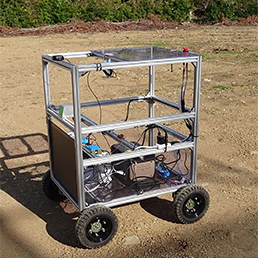
Autonomous mobile robot
Design and implementation of a ROS 2 system tailored to your requirements.
We will propose a ROS 2 system configuration tailored to your specific requirements. We provide software development services for robots, including autonomous driving, manipulator control, sensor processing, and recognition algorithms.
System Configuration Proposal
We design systems tailored to specific applications by combining publicly available ROS packages with our own custom-developed software. We verify software quality by combining actual device operation verification, simulation verification, and internal reviews.
Development Case Study: Autonomous Mobile Robot
Our company is developing autonomous mobile robots that travel across rough outdoor terrain. The robot generates a travel path from coordinates of start and destination points, moving while comparing its current position against the path. We conducted field tests at an orchard in Hamamatsu City, confirming stable autonomous navigation in outdoor environments.
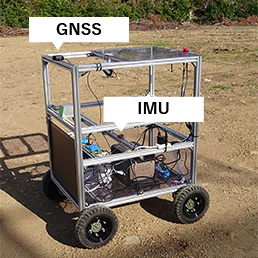
Autonomous mobile robot
Node configuration and system configuration diagram of autonomous mobile robot
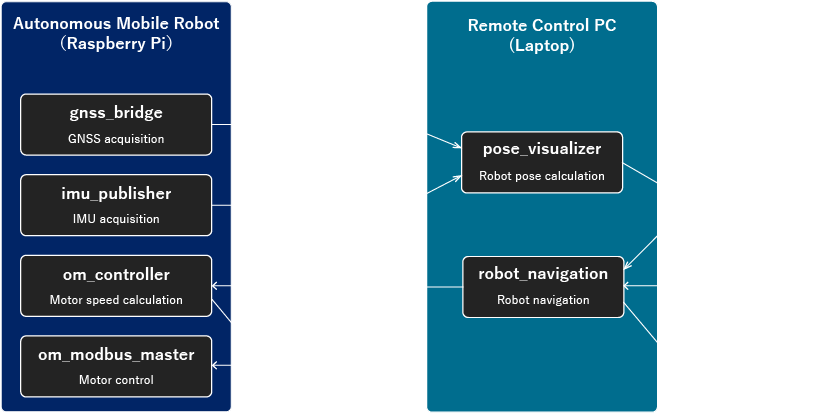
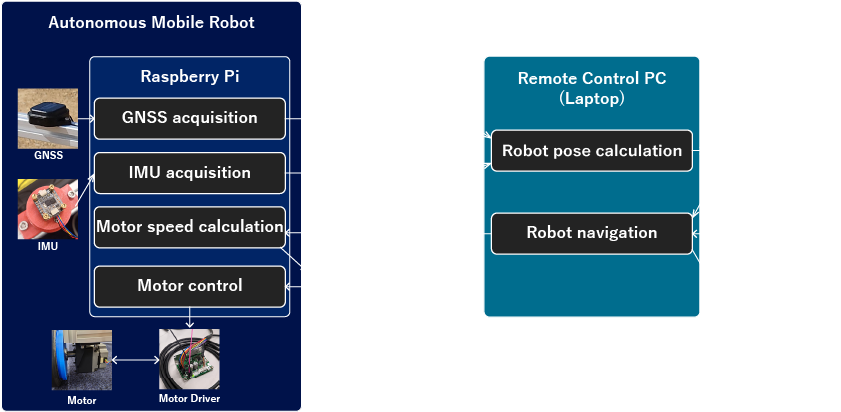
Obstacle detection using point cloud segmentation
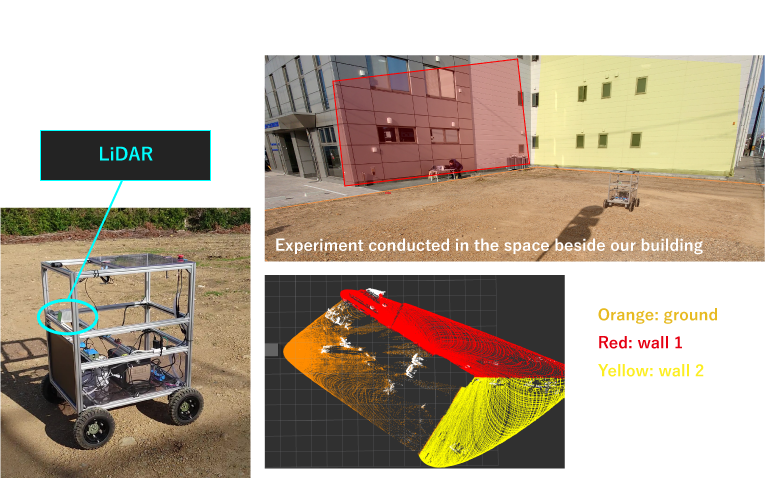
We are developing an algorithm to classify point cloud data acquired by LiDAR into ground, walls, and other obstacles.
The areas classified as obstacles are used to determine travel paths, enabling the robot to detect surrounding obstacles.
The areas classified as obstacles are used to determine travel paths, enabling the robot to detect surrounding obstacles.
Visualization results of obstacle detection algorithm using LiDAR
Scenes from an autonomous driving test at a farm
Verification in an environment close to the actual device using 3DCG and HILS
Our company supports 3DCG simulation using Unity and verification using HILS (Hardware In the Loop Simulation).
In HILS, the plant is simulated on a simulator while the actual computer is used as the controller. Its key feature is the ability to verify not only software but also the actual computer used in operation.
In HILS, the plant is simulated on a simulator while the actual computer is used as the controller. Its key feature is the ability to verify not only software but also the actual computer used in operation.
3DCG simulation using Unity
Robot behavior and space are modeled in 3DCG using Unity and reproduced in real time.
By utilizing 3D data such as VIRTUAL SHIZUOKA and PLATEAU, real-world outdoor spaces can also be reproduced as simulation environments.
By utilizing 3D data such as VIRTUAL SHIZUOKA and PLATEAU, real-world outdoor spaces can also be reproduced as simulation environments.
3DCG simulation using Unity
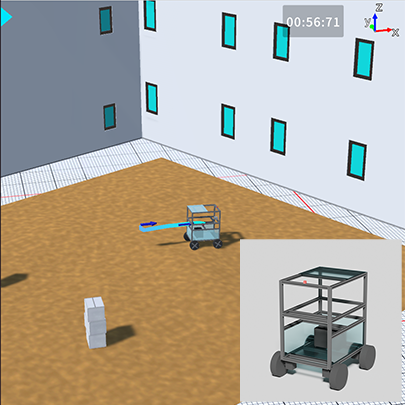
3D CG of the robot and environment created in Unity for simulation
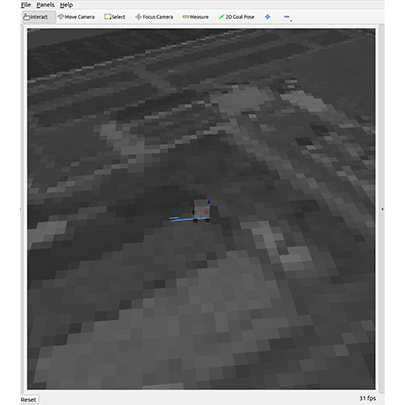
Simulation results visualized in Rviz
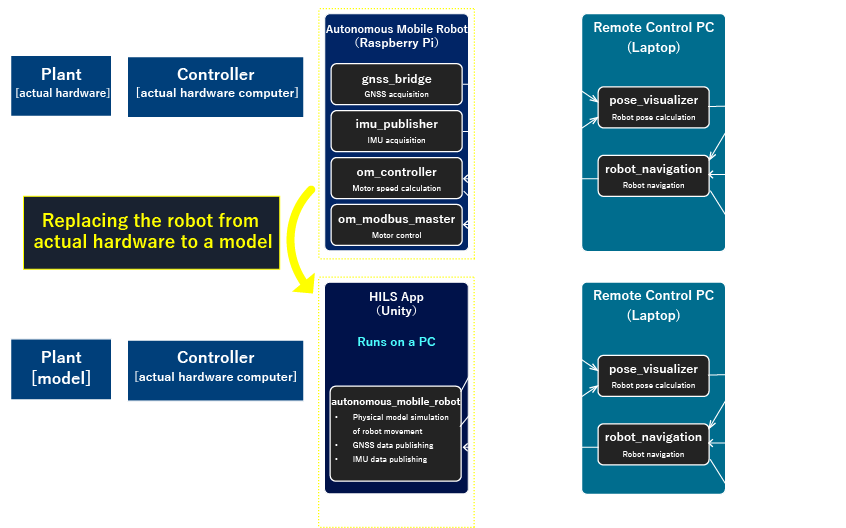
HILS: Virtualizing the plant and using actual hardware for the controller
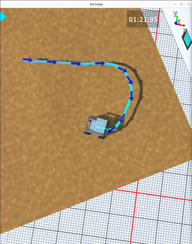
In general simulations, both the plant and the controller are reproduced in a virtual environment. Our company models only the plant and uses the actual computer directly as the controller. This follows the same concept as HILS (Hardware-in-the-Loop Simulation) used in MBD (Model-Based Development). For example, when developing control software for a robotic arm installed in a factory, one method is to reproduce both the robot and controller in simulation. Because we use actual hardware for the controller, we can verify control software running directly on the actual computer to be deployed. For autonomous mobile robots, we have a track record of running path-following algorithms on HILS to determine optimal tracking parameters for travel. Not many companies have adopted a similar setup, making it one of our core strengths.
Path-Following Algorithm Development on HILS
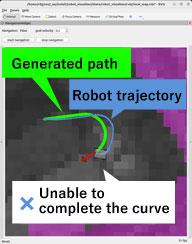
Pattern ①
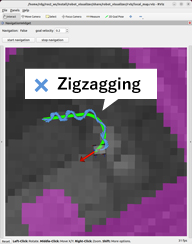
Pattern ②
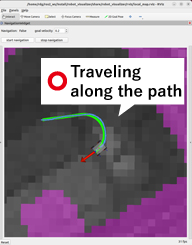
Pattern ③
Replacement Process in HILS
Development of Operational Systems
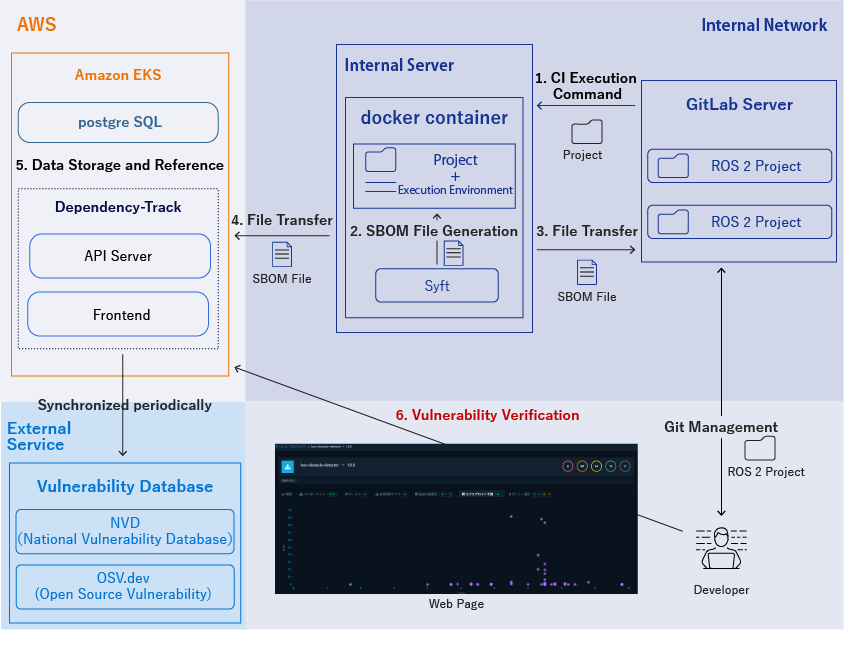
We develop robot operation systems that combine ROS 2 with IT systems. This includes not only controlling the robot itself, such as status monitoring and data management, but also the systems necessary for operation. Furthermore, utilizing the SBOM system operated within our company, we also support software configuration management and security management.
Vulnerability and License Management Using SBOM
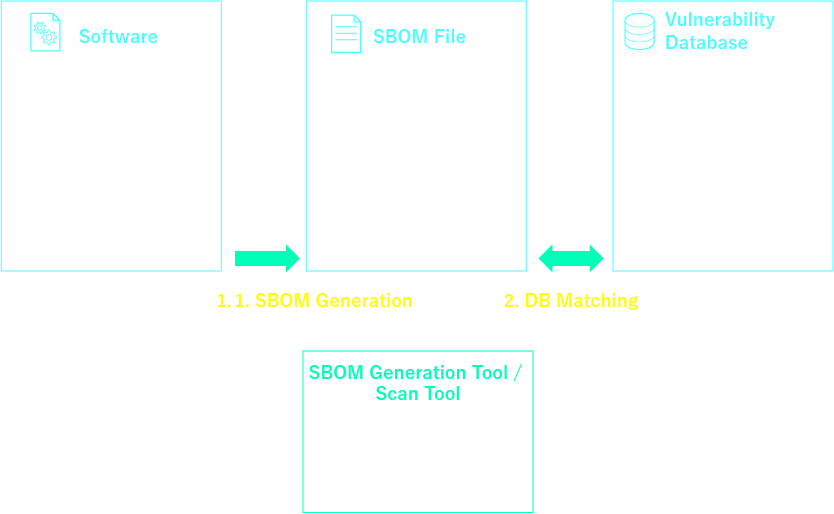
SBOM (Software Bill of Materials) is a bill of materials that summarizes software component information. By cross-referencing SBOM with vulnerability databases, you can check for vulnerabilities contained in the software used. In addition, managing license information of software in use allows verification of license-related risks. Our company has independently developed and operates an internal system to manage SBOM. We also support building SBOM for customer systems according to their needs.
SBOM
SBOM System Currently in Operation within Our Company
Integrated System Development Capabilities Utilizing AWS, Kubernetes, Zenoh, etc.
We also support the development of integrated systems connecting cutting-edge IT technologies such as AWS, Kubernetes, and Zenoh with robots.
Examples of Robot Operational Systems
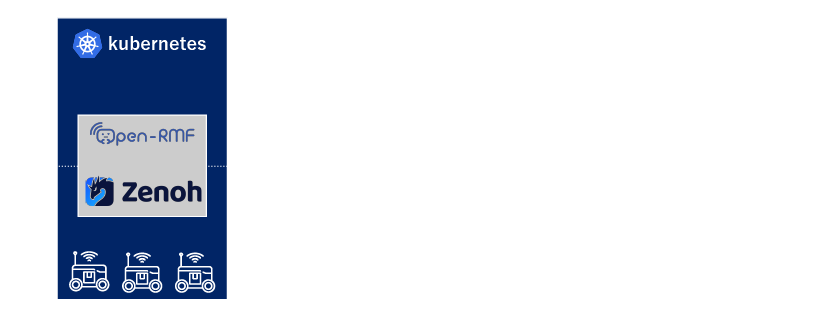
Example of a robot operations system using AWS / Kubernetes / Open-RMF / Zenoh
Robot Development Combining Pedestrian Flow Data
Assuming an environment where people and robots share the same space, we are working on simulations that combine pedestrian flow with robot operations. We are developing technologies to detect pedestrians using sensors such as LiDAR and reproduce detected human movements in 3D space. For example, a LiDAR that detects pedestrians can be reproduced in simulation, allowing you to verify pedestrian detection from the robot's perspective. We use two types of 3D pedestrian models: high-definition models suitable for visual display and lightweight models for LiDAR detection. This enables real-time simulation of environments including pedestrians. This technology can be utilized in the development and field trials of robots operating in populated environments, such as last-mile delivery robots. Robots operating on sidewalks or inside facilities must detect surrounding pedestrians and navigate safely according to the situation. Utilizing pedestrian flow simulation allows verification of robot operations in human-robot coexistence environments before deploying actual hardware.
Pedestrian Flow x Robot Simulation Scene
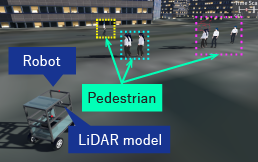
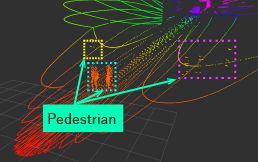
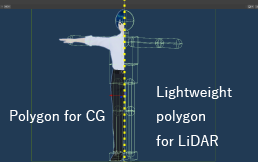
Simulation of autonomous mobile robot in a cityscape with pedestrian flow
From Design and Implementation Using ROS 2 to Verification Using HILS and Operational System Development
Our company supports everything from design and implementation using ROS 2, verification using actual hardware with HILS, to software management utilizing SBOM, and operational system development. We accumulate essential robot development technologies while validating our in-house developed autonomous mobile robots and systems on actual hardware. By combining pedestrian flow simulation and related technologies, we also support development in human-robot coexistence environments such as last-mile delivery robots.
Please feel free to contact us regarding robot and system development using ROS 2.
Please feel free to contact us regarding robot and system development using ROS 2.
* The map displayed on rviz2 was created by our company using the GSI Tiles (Seamless nationwide latest aerial photography) provided by the Geospatial Information Authority of Japan (https://maps.gsi.go.jp/development/ichiran.html).
The Syft logo was created by Anchore, Inc. and is used under the CC BY 4.0 license (https://creativecommons.org/licenses/by/4.0/).
The use of each logo featured in this article does not imply any official partnership or endorsement.
For other trademarks, please refer to our Trademarks page.
The Syft logo was created by Anchore, Inc. and is used under the CC BY 4.0 license (https://creativecommons.org/licenses/by/4.0/).
The use of each logo featured in this article does not imply any official partnership or endorsement.
For other trademarks, please refer to our Trademarks page.